ByJohn A
Artificial Intelligence and Blockchain
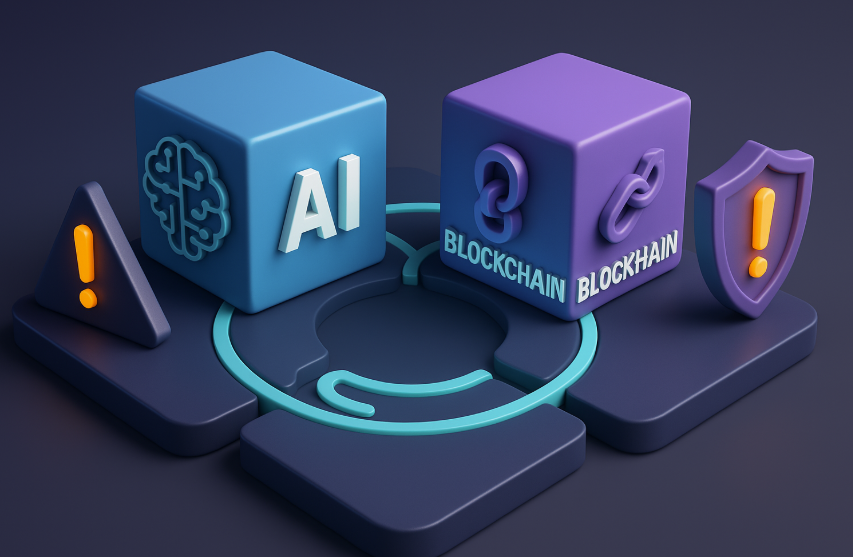
Artificial Intelligence and blockchain converge to enhance decision accuracy, data integrity, and programmable trust at scale. AI extracts patterns, optimizes processes, and automates insights; blockchain provides tamper-resistance, transparent provenance, and auditable governance. Together, they enable layered protocols, modular trust, and resilient systems with clear data sovereignty. Real-world adoption hinges on ethics, security, and compliance, guided by pragmatic roadmaps and governance frameworks. The next step hinges on addressing risk-framed architectures that balance innovation with accountability.
What AI and Blockchain Do for Each Other
Artificial intelligence and blockchain synergize by addressing complementary weaknesses in each technology: AI offers predictive power, pattern recognition, and decision-making at scale, while blockchain provides transparent provenance, tamper resistance, and trustless coordination. The alliance strengthens data governance, enabling auditable policies and secure data lineage.
Through layered protocols, autonomous systems gain reliability, and stakeholders achieve freedom through verifiable provenance, modular trust, and resilient, decentralized coordination.
See also: Practical Tips for 8172007422 When Troubleshooting Everyday Issues
Real-World Use Cases Across Industries
From finance to manufacturing, real-world deployments of AI and blockchain illustrate a pattern: AI drives insight and optimization at scale, while blockchain ensures traceable, secure, and decentralized trust across complex ecosystems. Across industries, data governance frameworks formalize stewardship, interoperability, and compliance; transparent provenance enables auditable histories, reducing risk and accelerating collaboration without sacrificing autonomy, efficiency, or adaptability in dynamic markets.
Key Challenges: Ethics, Security, and Compliance
What challenges arise when integrating AI and blockchain at scale in terms of ethics, security, and compliance?
The landscape demands vigilant ethics governance, ensuring transparent decision-making and accountable outcomes.
Security privacy must be embedded by design, balancing data utility with robust protections.
Pragmatic frameworks enable auditable processes, risk-aware governance, and resilient architectures, sustaining freedom while curbing misuse and systemic vulnerabilities.
How to Start: A Practical AI-Blockchain Adoption Roadmap
A practical AI-Blockchain adoption roadmap begins with a precise assessment of objectives, data flows, and governance requirements, followed by a staged plan that aligns technology choices with measurable outcomes.
The approach remains visionary yet pragmatic, analyzing risk, interoperability, and economics.
It emphasizes privacy governance and data sovereignty, guiding stakeholders to balance innovation with control, alignment, and transparent accountability across integrated AI-blockchain ecosystems.
Frequently Asked Questions
How Do AI and Blockchain Impact Data Sovereignty?
Data sovereignty evolves as AI and blockchain redefine data ownership, enabling granular access controls and immutable audits; cross border compliance becomes proactive rather than reactive, balancing innovation with governance, empowering institutions and individuals to steer digital futures.
What Are the Costs of Ai-Blockchain Integration at Scale?
Scaling costs loom large as AI-blockchain ecosystems expand, with energy, compute, and data fees multiplying; interoperability hurdles persist, complicating governance and data flows, yet pragmatic, visionary teams pursue modular architectures to sustain progress and freedom.
Can AI Privacy-Preserving Techniques Work With Blockchains?
AI privacy-preserving techniques can work with blockchains, enabling scalable confidentiality; privacy preserving methods integrate with consent-driven data sharing, while selecting appropriate consensus mechanisms to balance transparency, security, and freedom for participants in distributed ecosystems.
How Do Governance Models Differ for Ai-Enabled Blockchains?
“Teleportation” aside, governance models for AI-enabled blockchains vary: centralized vs. decentralized control, on-chain voting, and modular trust layers, emphasizing policy ethics and governance transparency to balance innovation with accountability for a freedom-seeking audience.
What Skills Are Hardest to Hire for Ai-Blockchain Projects?
Hard to hire for ai-blockchain projects centers on niche skillsets, blending cryptography, distributed systems, and ML rigor. The visionaries seek pragmatic talent, analytical mindsets, and autonomous contributors who embrace freedom to innovate within complex, evolving ecosystems.
Conclusion
In a world of undeniable potential, AI and blockchain stand as complementary engines, yet their power hinges on disciplined practice. Juxtaposing speed with restraint, innovation with accountability, the pair promises rapid decision-making nested in transparent provenance. Pragmatism tempers ambition: governance, ethics, and security must guide the rollout while predictive insights and tamper-proof records accelerate trust. Visionaries build layered, modular systems; skeptics insist on auditable policies. The synthesis remains transformative, contingent on responsible adoption that respects data sovereignty and human oversight.